If you are dreaming about waking up to wide water views on Merritt Island, you are not alone. Waterfront living here can be beautiful and rewarding, but it also comes with details that matter far more than they do in a typical home purchase. If you understand the waterbody, boating access, dock rules, and insurance exposure before you buy, you can make a smarter decision with more confidence. Let’s dive in.
Why Merritt Island waterfront is unique
Merritt Island is shaped by a mix of lagoons, canals, and riverfront settings that create very different ownership experiences. The Banana River Aquatic Preserve is part of the Indian River Lagoon system and covers about 30,000 acres between Merritt Island and the barrier island, extending from State Road 528 south toward the tip of the island.
The area is also closely tied to the Merritt Island National Wildlife Refuge, which spans about 140,000 acres and includes about 40,000 acres of brackish lagoon waters open to fishing across the Mosquito Lagoon, Indian River Lagoon, and Banana River. That natural setting is a major part of the appeal, especially if you value boating, fishing, kayaking, and wildlife viewing.
What this means for you is simple: not all waterfront is the same, even when homes may look similar online. On Merritt Island, the specific water frontage can affect your daily use, privacy, navigation, and maintenance expectations.
Focus on the waterbody first
Before you fall in love with a view, ask which waterbody the property actually fronts. That question can shape everything from boating convenience to the amount of nearby public launch activity.
Brevard County park information offers a useful real-world clue. Kiwanis Island Park provides Banana River access through Sykes Creek, Kelly Park East offers a four-lane Banana River ramp, and Osteen Park provides Indian River views. In practice, that means traffic patterns, launch access, and day-to-day boating feel can differ depending on where the home sits.
Banana River vs Indian River access
A home on or near the Banana River may offer a different boating rhythm than one oriented toward the Indian River side. Public launch locations, surrounding water use, and exposure to boat traffic can vary, so it helps to picture how you actually plan to use the water.
If you want frequent boating, ask about your route out from the dock and what conditions are like on a normal day. If you are more interested in views, paddling, or a quieter setting, the best fit may be different.
Shallow water and channel awareness
The refuge notes that Haulover Canal is part of the Intracoastal Waterway and sees heavy boater use between the Mosquito Lagoon and Indian River. It also notes that once you leave the Intracoastal Waterway, channel knowledge becomes important because the lagoon system includes winding turns and dead-end waterways.
For buyers, this is a reminder that good frontage is not just about having water behind the house. It is also about how usable that water is for your boat, your comfort level, and your typical day on the water.
Check docks, lifts, and seawalls carefully
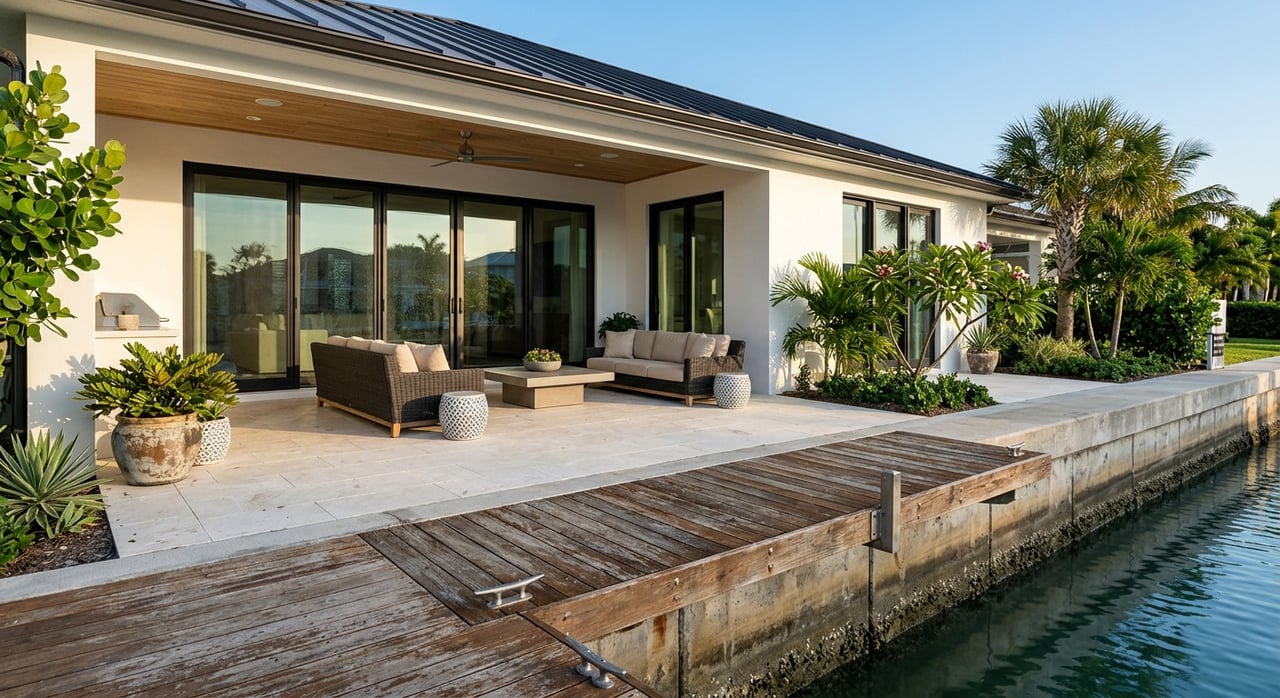
A waterfront home may come with a dock, boat lift, or seawall, but you should never assume those structures can be altered easily later. The permitting path can change depending on the structure, the location, and whether the property borders a natural or manmade body of water.
Florida DEP states that a private residential single-family dock is one dock at a single-family residence or dwelling unit designed to moor no more than two boats. Some single-family dock work may qualify for a self-certification or exemption path, but that does not mean every project is simple.
Brevard County’s permit guide says boat lifts at single-family residences or duplexes on manmade bodies of water are handled by the county, while work on natural bodies of water should be directed to Florida DEP. That distinction matters on Merritt Island, where many properties connect to natural waterfront areas.
What to verify before closing
For single-family docks and seawalls, Brevard County requires a recent survey, a plot plan, and the county’s seawall and dock affidavit. The affidavit also states that permit issuance does not determine ownership rights.
That means a buyer should verify more than whether the structure exists. You will want to know whether the current dock, lift, or seawall was permitted properly and whether it can be repaired, replaced, or expanded without changing the project scope or permit path.
A practical waterfront due diligence checklist should include:
- A review of the survey and plot plan
- Permit history for the dock, lift, or seawall
- Current physical condition of marine structures
- Whether the waterbody is considered natural or manmade for permitting purposes
- Whether your future plans could trigger a different approval process
Budget for marine maintenance
Waterfront features are assets, but they are not maintenance-free. Because dock, seawall, and lift work is regulated and tied to current surveys and plans, it is wise to budget for professional marine inspection and future shoreline maintenance as part of ownership.
This is especially important if you are buying from out of state or purchasing a second home. A beautiful dock in listing photos does not tell you the full story about condition, remaining life, or future repair costs.
Understand boating and access rules
Many buyers picture a simple “walk out and go” boating lifestyle. On Merritt Island, that can absolutely be part of the appeal, but it is still important to understand local access rules and water restrictions.
Public boating access is a major part of the local lifestyle. Kiwanis Island Park has a two-lane motorized ramp into Sykes Creek leading to the Barge Canal or Banana River, and Kelly Park East has a four-lane Banana River ramp plus a sailboard launch area.
At the same time, some refuge-managed roads and boat ramps require a Refuge Pass. The U.S. Fish and Wildlife Service also notes that portions of the Banana River are manatee sanctuary waters open only to non-motorized boats, while other waters may be posted slow speed or closed within the Kennedy Space Center security zone.
Why this matters to buyers
If your vision of waterfront living includes power boating, fishing runs, paddleboarding, or frequent guests bringing their own watercraft, local rules can affect how you use the property. A home may have water access, but your real experience will depend on the route, the restrictions, and the type of boating you prefer.
This is one reason local guidance matters so much in a waterfront search. Two homes with similar price points can offer very different day-to-day experiences once you factor in access and navigational realities.
Review flood and insurance early
Insurance is one of the most important parts of buying waterfront property on Merritt Island. It should be reviewed early, not after you are emotionally committed.
FEMA states that most homeowners insurance does not cover flood damage and that flood insurance is a separate policy. FEMA also notes that flood insurance often has a 30-day waiting period before it takes effect.
For local flood map information, Brevard County’s floodplain office is the official community repository for FEMA Flood Insurance Rate Map panels and serves as the county’s liaison to FEMA on floodplain development. The county has participated in the National Flood Insurance Program since 1972.
Florida’s insurance consumer resources also note that a homeowners policy may carry a separate hurricane deductible for windstorm damage, flood coverage is usually separate from homeowners coverage, and insurers must offer discounts for wind-mitigation features.
Insurance items to check during escrow
A strong waterfront offer should be conditioned on an insurance review. In practical terms, that review should look at:
- Flood zone classification
- Elevation information
- Roof age
- Wind-mitigation features
- Separate flood insurance needs
- Hurricane deductible exposure
Those numbers can meaningfully affect your monthly cost of ownership. Reviewing them early helps you avoid surprises and gives you a clearer picture of affordability.
Expect a conservation-minded lifestyle
One of the biggest reasons people love Merritt Island is also one of the biggest ownership considerations: the natural environment. The Merritt Island National Wildlife Refuge encompasses 140,000 acres and provides habitat for more than 1,500 species, including 15 federally listed species.
The Banana River area includes mangrove swamps, tidal mud flats, sandy shorelines, seagrass habitat, spoil islands, and habitat for manatees, pelicans, birds, and turtles. Florida wildlife resources also explain that manatees use rivers, bays, canals, estuaries, and coastal areas, and that seagrasses support fish, shellfish, shoreline stability, and water quality.
For you as a buyer, this creates a waterfront lifestyle that is both scenic and stewardship-focused. You can enjoy boating, kayaking, birding, fishing, and watching wildlife, while also understanding that shallow-water awareness, protected seagrass areas, and speed or access restrictions are part of responsible use.
Smart questions to ask before you buy
When you tour waterfront homes on Merritt Island, keep your focus on function as much as appearance. The right questions can reveal whether a property truly fits your lifestyle.
Here are a few of the most useful ones:
- Which waterbody does this lot front?
- How does that location affect boating access, privacy, and nearby launch traffic?
- Is there a dock, lift, or seawall, and was it permitted?
- Can those structures be repaired, replaced, or expanded under the current rules?
- Is the property in a flood zone?
- What separate flood insurance or hurricane deductible exposure should I expect?
- Are there Refuge Pass requirements, manatee sanctuary rules, or slow-speed restrictions that affect day-to-day boating?
The more clearly you answer these questions upfront, the easier it becomes to choose a home that supports the way you actually want to live.
Buy with clarity, not just excitement
Buying waterfront property on Merritt Island is about much more than finding a pretty lot and a dock. It is about matching your goals to the right waterbody, understanding boating realities, confirming the status of shoreline structures, and reviewing insurance before you close.
When you approach the process with clear due diligence, you put yourself in a much stronger position to enjoy the lifestyle that drew you here in the first place. If you want thoughtful guidance as you compare Merritt Island waterfront homes, Tracy Ryland offers local insight, refined service, and a steady, client-first approach.
FAQs
What should buyers know about Merritt Island waterfront location?
- Buyers should confirm which waterbody the property fronts because Banana River, Indian River, canals, and lagoon access can affect boating routes, privacy, and nearby launch activity.
What should buyers check about docks and seawalls on Merritt Island?
- Buyers should review surveys, plot plans, permit history, and the current condition of any dock, lift, or seawall, and confirm whether future repairs or upgrades may require a different permit path.
What should buyers know about flood insurance for Merritt Island waterfront homes?
- Buyers should know that flood insurance is usually separate from homeowners insurance, and they should review flood zone, elevation, roof age, wind mitigation, and hurricane deductible exposure early in the contract period.
What boating restrictions can affect Merritt Island waterfront owners?
- Buyers should be aware that some refuge-managed access points require a Refuge Pass and that certain waters may have manatee sanctuary, slow-speed, non-motorized, or security-related restrictions.
What is the waterfront lifestyle like on Merritt Island?
- Waterfront ownership on Merritt Island often centers on boating, kayaking, fishing, and wildlife viewing, with added responsibility around shallow-water navigation, habitat awareness, and long-term shoreline maintenance.